|
SUMMARY:
If you have to copy write persuasive email blasts, email newsletters or sales letters, you've probably heard the advice "write short for email." It is easy to say, but how do you really do it? Start by using these lists of short words, strong verbs and blah words as a shoehorn |
Do you have to copywrite persuasive email blasts, email
newsletters or sales letters? You've probably heard the advice
"write short for email."
It is easy to say, but how do you really do it?
Whenever we hire a new writer here at MarketingSherpa, we hand
them a printed report, 'The Editorial Process' by Harry Baisden,
published by the Newsletter & Electronic Publishers Association.
The report was actually created for print newsletter journalists,
but so much of Baisden's advice applies to email, that we asked
him for permission to share a few of the most useful sections
with you:
-> Short words list
Use this list (or a similar one of your own making) as a shoehorn
to tighten your copy and make it more readable:
Don't say: == When you can say:
At the time == when
Currently == now
Is able to == can
Requirements == needs
Approximately == about
Increase == gain
Consume == use
Consumption == use
In order to == to
Reduced == cut
In favor of == for
During == in
However == but
Production == output
Myself == me
As yet == yet
Is a person == who is
In the near future == soon
Utilize == use
Numerous == many
Facilitate == ease
Individual == man or woman
Remainder == rest
Initial == first
Initiate == begin or start
Implement == do
Sufficient == enough
Attempt == try
Referred to as == called
With the possible exception == except
For the reason that == because
Lacked the ability to == couldn't
At this (that) point in time == now (then
At a later date == later
Is going to == will
Take into consideration == consider
Has the capability == can
Voiced opposition (support) == opposed (supported
On a daily basis == daily (same for weekly, etc)
In addition to== also
In excess of == more than
Calls into question == questions
Prior to == before
The fact that == that
Pointed to the fact == noted
In light of the fact that == since
In the near term == soon
-> Strong verbs & copy intros that hook readers
Strong verbs are the key to good leads. The more activity you can
show with your verb selection, particularly in the lead, the
better the chance you are going to hook your reader.
Don't say: When you could say:
Determined the truth of == verified
Gave permission to == permitted
Held a meeting == met
Proved of benefit to == benefited
Put in an appearance == appeared
Reached an agreement == agreed
Submitted his resignation == resigned
Take into consideration == consider
Another clue to the weak lead is "not." Any time you see that
word in your lead, you can probably improve on it by getting rid
of the negative and using a positive sentence with a negative
connotation.
Example: "Democratic leaders expect the bill to fail" is
stronger, shorter, and more concise than "Democratic leaders do
not expect the bill to pass."
-> Words you can eliminate altogether
You can tighten your writing even more by cutting out some common
words that do little more than clutter up your writing.
For example, in the Short Words list above, I advised using the
word "now" instead of "currently." If you are writing in the
present tense and there is no need to compare what is happening
now with what happened in the past or is expected to happen in
the future, why even use "now?"
You can change: "ABC Widget Co. says it plans to introduce a new
solar-powered widget in January. Currently, the company produces
only standard electrical widgets."
To: "ABC Widget Co. says it plans to introduce a new solar-
powered widget in January. The company now produces only standard
electrical widgets."
Why not rebuild the sentences into something that takes
advantage of present tense to get rid of the "now" and is just as
clear?
"ABC Widget Co., a leading builder of standard electrical
widgets, says it plans to introduce a new solar-powered widget in
January."
Here is a list of words that you might want to think twice before using:
That
Both
Now
Altogether
Personal
Very
Truly
Essentially
Basically
Nature (as in "a friendly nature")
Nice
Literally
Importantly
Interestingly
Feature
Factor
Either (don't use for both, particularly)
Read Part II of Baisden's advice for writers.
Our thanks to the Newsletter & Electronic Publishers Association
for permission to quote from Baisden's report:
http://www.newsletters.org
Learn what a strong value proposition statement looks like and how to improve your messaging with MECLABS Online Value Proposition Development Certification course.
Related Resources
High-impact Email Newsletter Writing Part II: How to Use Strong Bold Words in Your Intro
MarketingSherpa Quick Guide to Email Marketing
Creating Engaging Content: A five-step method for busting writer’s block
Lead Generation: The power of copy
Join our thousands of weekly case study readers.
Enter your email below to receive MarketingSherpa news, updates, and promotions:
Note: Already a subscriber? Want to add a subscription?
Click Here to Manage Subscriptions
Get Better Business Results With a Skillfully Applied Customer-first Marketing Strategy

The customer-first approach of MarketingSherpa’s agency services can help you build the most effective strategy to serve customers and improve results, and then implement it across every customer touchpoint.
Get More Info >MECLABS AI

Get headlines, value prop, competitive analysis, and more.
Use the AI for FREE (for now) >Marketer Vs Machine

Marketer Vs Machine: We need to train the marketer to train the machine.
Watch Now >Live, Interactive Event

Join Flint McGlaughlin for Design Your Offer on May 22nd at 1 pm ET. You’ll learn proven strategies that drive real business results.
Get Your Scholarship >Free Marketing Course

Become a Marketer-Philosopher: Create and optimize high-converting webpages (with this free online marketing course)
See Course >Project and Ideas Pitch Template

A free template to help you win approval for your proposed projects and campaigns
Get the Template >Six Quick CTA checklists

These CTA checklists are specifically designed for your team — something practical to hold up against your CTAs to help the time-pressed marketer quickly consider the customer psychology of your “asks” and how you can improve them.
Get the Checklists >Infographic: How to Create a Model of Your Customer’s Mind
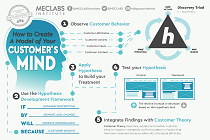
You need a repeatable methodology focused on building your organization’s customer wisdom throughout your campaigns and websites. This infographic can get you started.
Get the Infographic >Infographic: 21 Psychological Elements that Power Effective Web Design
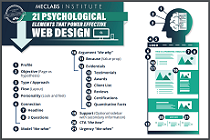
To build an effective page from scratch, you need to begin with the psychology of your customer. This infographic can get you started.
Get the Infographic >Receive the latest case studies and data on email, lead gen, and social media along with MarketingSherpa updates and promotions.