|
SUMMARY:
No summary available. |
Tweens are a $260 billion market in the US - but hardly any
marketers are emailing them. Here's what you need to know:
The bad news is it's not an easy demographic to market to.
Tweens, kids caught in the middle between the childhood and teen
years, live in a bewildering state of confusion (remember junior
high?) Unsure of whether they're almost-teens or still-barely-
kids, they act both ways. Your creative has to walk a tightrope.
Add to that mix the US's restrictive Children's Online Privacy
Protection Act (COPPA) -- which states that Web sites must obtain
parental consent before collecting, using, or disclosing personal
information from children under 13 -- and you've got a real mess
when it comes to email campaigns.
The good news is these complications mean that most companies
haven't figured the rules of engagement yet.
So if you do get into the market, you won't find a whole lot of
competition. Plus, there are two nifty loopholes emailers can take
advantage of...
- Tween demographic basics
- The email newsletter loophole
- The viral email loophole
- Top 7 Do's and Don'ts When Emailing Tweens
- 5 useful links (including creative samples)
-> Tween demographic basics
o What's a tween?
There are roughly 19.5 million tweens in the US today.
Though we heard definitions of tweens as everything from ages 7 -
14, the most common range is more like 8-12.
This range depends on a number of factors: girls mature more
quickly than boys, so they enter the difficult tween years earlier
(say around 8), while boys may not reach the same stage for another
year or two.
Where they fall in the family also dictates whether they are truly
a tween: a 9-year-old girl with older siblings can see the cool,
teen-like things she has to look forward to, while a 9-year-old who
is the oldest, with two younger sibs, is still entrenched in
childhood;
o How much buying power do tweens have?
According to the marketing handbook, 'The Great Tween Buying
Machine' (link below), tweens have more buying power than any other
demographic under 21 because they have more of their own money than
younger kids do, and they influence their parent's purchasing
decisions (through the powerful 'nag factor') more than independent
older teens do.
We're talking hundreds of billions of dollars. Here's the annual
breakdown (1999 figures):
$10 billion tweens spending their own money
$176 billion parents buying things specifically for tweens
$74 billion parents' buying influenced by tween's opinions
----
$260 billion annually
o Tweens and the Internet
According to Grunwald Associates data, close to 80% of tweens are
currently online. They connect from both home and school.
(By the way: preliminary Grunwald data suggests quite a few kids
feel that user experience at schools is slower than expected and
does not live up to hype.)
A huge split exists between the "haves" and "have-nots" -- tweens
from higher income families are more likely to check their email at
home, whereas kids from lower income families mainly have access at
school and are therefore more restricted in when and how they get
online.
Tweens use the Internet for social interaction and communication,
seeing it as a way of "getting out of the house." It's escape
without a driver's license.
They love instant messaging and may have as many as 40 or 50 other
kids on their IM list.
-> The email newsletter loophole
An exception to the COPPA rules exists for newsletters: If you're
sending periodic email newsletters to children, all you have to do
is notify the parent and that's enough.
However, you can't do anything else with the child's data or email
them anything but the newsletter.
Announcements of sweeps or sales, then, would be out of the
question -- unless, of course, you send it under the guise of the
newsletter.
The Cartoon Network capitalizes on tweens' love of communication by
inviting them to join an online community. Once the tween has
joined, the parent is sent an email permission slip (link to
sample of parental permission letter below).
It's a negative option, so the parent doesn't need to respond.
The permission slip states, "If you do not cancel your child's
registration within 48 hours, we will use your child's e-mail
address for the purpose of sending our online newsletter(s) from
time to time."
Kids receive ToonFlash, an enewsletter that gives updates on new
games, TV shows, exclusive "insider information," and sweepstakes.
It comes out about once a month.
For kids who win the sweepstakes, a parent needs to fill out a
permission form offline and mail it in. Otherwise, says Denise
Tayloe, CEO of Privo, "You may spend $50,000 running a contest,
everybody registers, and if you don't take the next step to get
parental permission, you have to delete all the info on the kids
that you collected."
-> The viral email loophole
You can get around COPPA rules by giving kids their own tools to
communicate with each other (which they love, anyway).
"Kids are very responsive to anything that gives them a perception
of independence or control," says Paul Metz of KidzEyes. "They like
things that they can choose for themselves or manipulate by
themselves."
Funny blurbs, interesting cursors, or anything that lets kids
interact with friends works well.
Nick.com allows kids to send a goofy personalized letter to friends
from "summer camp." (Camp options include "Camp Pink Eye,"
"Arachnid Acres," and "Camp Bed Bug.")
The friend gets an email with a link to the letter, which in turn
has links back to Nick.com at both the bottom and top of the page,
along with a "create your own" button (link to sample below).
The Cartoon Network also makes the most of the viral marketing
power of kids by enticing them to forward games or send e-
greetings. When a game is forwarded, the friend gets an email
headed up with, "From the Cartoon Network Grapevine."
The message reads:
Have you heard about what's happening at CartoonNetwork.com?
Your friend Anne Holland wants you to get the scoop by checking
out this page [link]. Now that the word is out, feel free to pass
the news along to more of your friends. We look forward to
seeing you there!
-> Top 7 Do's and Don'ts When Emailing Tweens
Acknowledge that they are growing up and making decisions. They
want to feel that you are talking to them as an equal. But remember
that they exist in an awkward in-between place, and you need to
walk a fine line when it comes to your message:
#1. Target kids or tweens, but not both.
While tweens are testing the boundaries of independence, they
sometimes still need the reassurance that kids need-- but they
won't take well to being targeted as kids in a public way.
"If you're talking to tweens in a place where it's public and
they're getting their message among friends, then you want to
appeal to their independent, mature side," says Carrie Heinonen,
independent ideation facilitator and former Marketing Manager,
Quaker Oats.
Don't refer to the fact that they can't make up their own minds
about things in the household. Highlight how your product helps
them achieve control.
If it's a kid-oriented product, don't try to wrap it in something
else to make it appealing to tweens. "Tweens will self-select to
interact with the product if they're feeling kidlike at home,"
Heinonen says.
#2. Make it funny.
KidzEyes, a C&R Research online research panel of kids, recently
asked what companies could do to get kids to pay attention. Humor
was the number one thing kids say they are looking for online.
#3. Avoid hype.
This was number 2 in the KidzEyes panel. "It's not about being
gimmicky or using slang," says Paul Metz, VP, C&R Research. "It's
about telling the truth."
Don't over-promise, like saying, "Hey kids, buy this product and
you'll be the coolest kid on the block." They'll see right through
you.
#4. Don't plug nonconformity.
Community and "fitting in" is important to tweens. Whereas for a
teenager, it might be kind of cool to be "out on the fringe,"
that's scary for a tween.
Show your product in a social setting that projects group unity.
#5. Play down the "icky" factor.
An ad on TV may be totally kid-targeted, but online, you're more
likely to be reaching kids and their parents. Therefore, be kid-
targeted but mom-friendly.
In other words, if your product is gooey or has other elements Mom
might consider unsavory, don't overdo it.
#6. Fantasy/reality combination, or "lighthearted reality."
Teens are firmly rooted in reality, kids in fantasy. For tweens,
the whole fantasy/reality combination is most appealing.
Think of tween-oriented shows like "Saved by the Bell," "Teen
Witch," or "Boy Meets World."
"They're real kids but living more or less in fantasy world.
They're not dealing with the darker realities of life," says
Heinonen.
#7. Consider different messages to boys versus girls
Boys want to demonstrate mastery.
Boys are all about gaming and winning. Give them games and tools to
interact with each other: the ability to email game scores to each
other, challenge a friend to a game, show how high up they can get
their names on a high-score page.
Girls want to know how other people perceive their world.
More interested in fitting in and being popular, girls want to see
polls of what's important to others, have the chance to vote on
their favorite model, find idols to emulate.
Tell them trends in fashion and anything else that helps them wear
the right thing, like the right people, talk to the right group at
school.
-> 4 Useful links related to this article:
A. Creative samples and parental permission letter:
http://www.marketingsherpa.com/cn/ad.html
B. Info about kids' privacy and COPPA:
http://www.kidzprivacy.com
http://www.ftc.gov/bcp/conline/edcams/coppa/index.html
C. Privo, Inc. a company helping marketers manage kids' email
permission in a COPPA-compliant format http://www.privo.com
D. Grunwald Associates, a market research firm and consultancy
focusing on kids and schools, and the kid/parent market:
http://www.grunwald.com
Join our thousands of weekly case study readers.
Enter your email below to receive MarketingSherpa news, updates, and promotions:
Note: Already a subscriber? Want to add a subscription?
Click Here to Manage Subscriptions
Get Better Business Results With a Skillfully Applied Customer-first Marketing Strategy

The customer-first approach of MarketingSherpa’s agency services can help you build the most effective strategy to serve customers and improve results, and then implement it across every customer touchpoint.
Get More Info >MECLABS AI

Get headlines, value prop, competitive analysis, and more.
Use the AI for FREE (for now) >Marketer Vs Machine

Marketer Vs Machine: We need to train the marketer to train the machine.
Watch Now >Live, Interactive Event

Join Flint McGlaughlin for Design Your Offer on May 22nd at 1 pm ET. You’ll learn proven strategies that drive real business results.
Get Your Scholarship >Free Marketing Course

Become a Marketer-Philosopher: Create and optimize high-converting webpages (with this free online marketing course)
See Course >Project and Ideas Pitch Template

A free template to help you win approval for your proposed projects and campaigns
Get the Template >Six Quick CTA checklists

These CTA checklists are specifically designed for your team — something practical to hold up against your CTAs to help the time-pressed marketer quickly consider the customer psychology of your “asks” and how you can improve them.
Get the Checklists >Infographic: How to Create a Model of Your Customer’s Mind
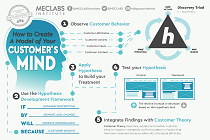
You need a repeatable methodology focused on building your organization’s customer wisdom throughout your campaigns and websites. This infographic can get you started.
Get the Infographic >Infographic: 21 Psychological Elements that Power Effective Web Design
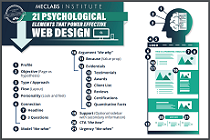
To build an effective page from scratch, you need to begin with the psychology of your customer. This infographic can get you started.
Get the Infographic >Receive the latest case studies and data on email, lead gen, and social media along with MarketingSherpa updates and promotions.